
Claims operations rarely break down because of a single stage in the process.
More often, the friction happens between them.
A delayed handoff between inspection and estimating. Inconsistent documentation between vendors. Gaps in communication between the carrier, policyholder, and service providers.
As claims operations become more interconnected, those breakdowns can impact everything from cycle time and file quality to policyholder experience and operational cost.
At the same time, carriers are under growing pressure to deliver faster, more transparent, and more scalable claims operations – without sacrificing accuracy, service quality, operational control, or documentation standards.
That’s why many organizations are rethinking how claim workflows are structured. Integrated workflows, shared data, and real-time visibility are making it easier to coordinate the lifecycle of the claim with greater alignment, consistency, and operational efficiency.
“The focus is no longer just the performance of individual claim stages. It’s how effectively those stages work together across the lifecycle of the claim.” — John Burns, Chief Client Officer, Eberl Claims Service
Why Claim Workflow Coordination Matters More Than Ever
Today’s carriers are balancing increasing claims complexity with growing expectations around speed, transparency, and policyholder experience.
Claims teams are expected to move quickly without sacrificing documentation quality, communication, visibility, or defensibility – even during high-volume catastrophe (CAT) events and periods of workforce strain.
For most carriers, success depends on consistently achieving three critical outcomes across the claims process:
- Speed: Reducing cycle times and keeping claims progressing efficiently from FNOL through resolution.
- Service: Delivering a responsive, transparent, and positive experience for policyholders throughout the claims process.
- Quality: Maintaining defensible documentation, file consistency, and workflows aligned to carrier standards and compliance expectations.
Achieving all three outcomes consistently becomes more difficult when workflows, vendors, and communication channels operate independently. Delays between stages, fragmented visibility, inconsistent handoffs, and disconnected operational processes can create friction that impacts both claim performance and customer experience.
The operational impact extends beyond efficiency alone. According to a 2025 consumer claims experience survey, 83% of consumers said they would consider switching insurance carriers after a poor claims experience – underscoring how closely policyholder retention is tied to speed, transparency, and communication throughout the claims process.
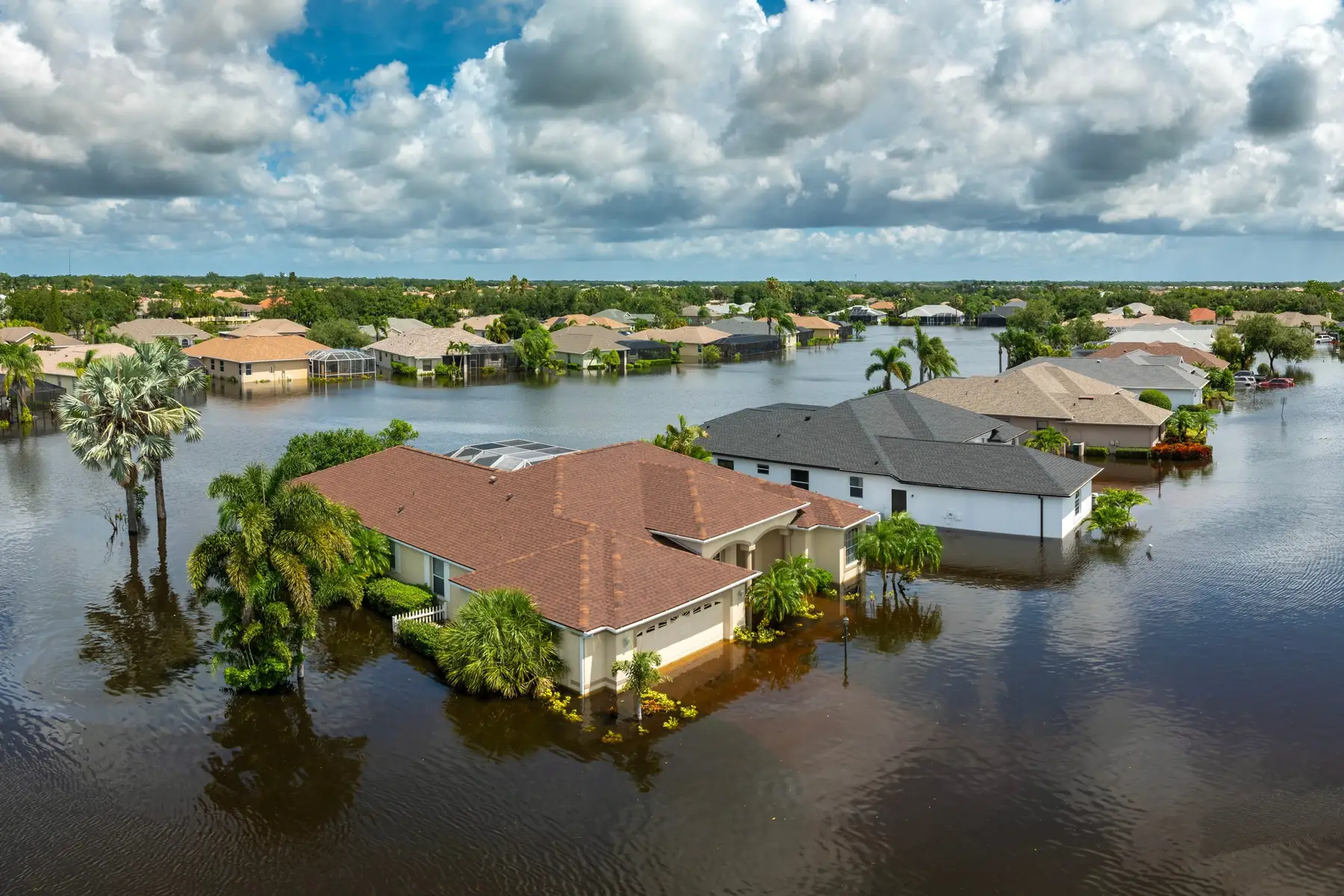
Those operational challenges become even more visible during CAT events and periods of elevated claim volume, when disconnected workflows, communication gaps, and inconsistent coordination can quickly create compounding delays across the lifecycle of the claim.
That’s why more organizations are moving beyond disconnected point solutions and toward connected workflows designed to improve coordination, streamline communication, and reduce fragmentation throughout claims handling.
Through connected workflows and coordinated operational support, Eberl helps carriers create greater alignment across the claims process while maintaining flexibility within existing operations.
Operational Alignment Across the Claim Lifecycle
Operational alignment is not simply about consolidating services. It’s about creating greater continuity across the claims process.
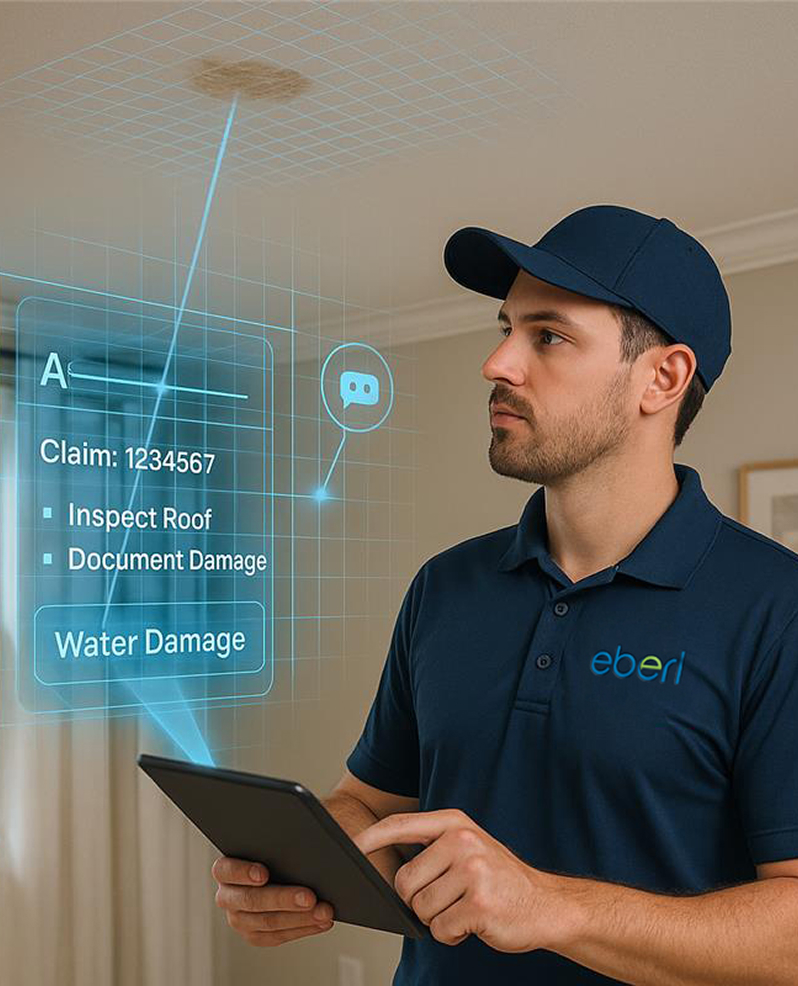
When workflows are coordinated across FNOL, inspection, estimating, adjusting, repair, and resolution, carriers gain greater visibility into claim progression while reducing delays, communication gaps, and friction between stages. Better coordination supports faster decision-making, more consistent documentation, and a smoother experience for both carriers and policyholders.
Eberl supports that alignment through connected operational workflows that integrate within existing carrier systems, communication expectations, and claims processes. The goal is not to add operational complexity, but to function as an extension of the carrier’s existing workflow while maintaining operational control.
This becomes especially important during CAT events and periods of elevated claim volume, when operational strain can expose breakdowns between vendors, systems, and communication channels.
Connected workflows help carriers:
- Reduce delays caused by disconnected handoffs
- Improve operational visibility across the claims process
- Maintain more consistent documentation and file quality
- Streamline communication between stakeholders
- Support a more seamless policyholder experience
As claim complexity grows, coordination across all parties involved in the claim becomes even more important. A single claim may involve carriers, policyholders, inspectors, adjusters, contractors, and support teams operating across multiple systems and communication channels. Without aligned workflows, even routine claims can experience delays caused by fragmented communication, missed updates, or inconsistent information between stages.
Policyholder expectations are also evolving alongside claims operations. J.D. Power’s 2024 U.S. Claims Digital Experience Study found that digital claims interactions continue to outperform traditional communication channels in overall customer satisfaction – reinforcing the growing importance of transparency, responsiveness, and real-time visibility throughout the claims process.
That’s why carriers increasingly need workflows that provide real-time insight into claim progression and operational activity without disrupting existing systems or adding unnecessary complexity.
At the same time, effective claims coordination requires more than technology alone.
Maintaining consistency throughout the lifecycle of the claim still depends on experienced teams, aligned communication, trained operational resources, and disciplined oversight across every stage of the process.
Technology can improve speed and visibility, but connected workflows are most effective when operational execution, communication, and quality standards remain aligned behind the technology itself.
Why Flexibility Matters in Claims Operations
Not every carrier needs full end-to-end support across the entire claim lifecycle.
In many cases, carriers engage partners for a specific operational need – inspection services, independent adjusting support, managed repair coordination, specialty services, or CAT surge staffing. But claims operations rarely remain static.
A claim that initially appears straightforward may quickly become more complex. A carrier managing routine claim volume may suddenly need additional resources following a CAT event. An inspection assignment may ultimately require licensed adjusting support, repair coordination, or specialty claims support for complex, escalated, or litigation-sensitive losses.
That operational unpredictability is where flexibility and operational alignment become especially valuable.
Rather than forcing carriers to shift between disconnected vendors or processes, Eberl allows support to expand within the same coordinated framework as claim needs evolve.
This becomes especially important when carriers are managing varying claim types, litigation-sensitive losses, changing operational demands, or sudden surges in volume following CAT events.
For example, Eberl recently supported a carrier in Texas that initially engaged our team for inspection services. As the claim progressed, the carrier identified the need for licensed adjusting support due to increasing claim complexity and time sensitivity. Because communication channels, workflows, and operational coordination were already aligned, Eberl was able to quickly expand support while helping the carrier maintain operational consistency throughout the claim process.
Whether carriers need support at a single stage of the process or across multiple aspects of the claim lifecycle, operational continuity becomes easier to maintain when workflows, communication, and support resources remain connected as claim needs evolve.
Building More Connected Claims Operations
As claims operations become more interconnected, competitive advantage will increasingly come from a carrier’s ability to reduce fragmentation between stages, maintain visibility across the lifecycle, and create operational continuity from FNOL through resolution.
Whether carriers need support at a single stage of the claim process or across the full lifecycle, operational alignment is becoming increasingly important to improving claim outcomes, maintaining consistency, and supporting policyholder experience at scale.
To learn more about Eberl’s connected claims capabilities, including inspection services, independent adjusting, managed repair, and specialty claims support, explore our solutions or connect with our team.