
Not every property claim should be inspected the same way. The strongest inspection programs don’t force every loss into a single model. They use inspection-method triage to route each assignment to the approach that best fits the claim – whether that’s drone inspection services, onsite ladder-assisted roof inspection, or a combination of both.
That matters because inspection quality shapes everything downstream: cycle time, LAE, documentation quality, safety, adjuster productivity, and policyholder experience.
AI-enabled review tools and drone inspection services are powerful parts of this evolution – but they deliver the most value when integrated into a broader workflow with trained inspectors, consistent capture standards, expert review, and adjuster oversight.
At Eberl, we view this as an inspection-model evolution rather than a technology story alone.
In practice, that means the way inspections are planned and executed directly influences every stage that follows – from documentation and estimating to repair and final claim resolution.
A hybrid inspection model improves claim outcomes across several critical areas:
Faster claim assessment starts with better triage
Every claim has its own characteristics, and selecting the right inspection method depends on multiple factors.
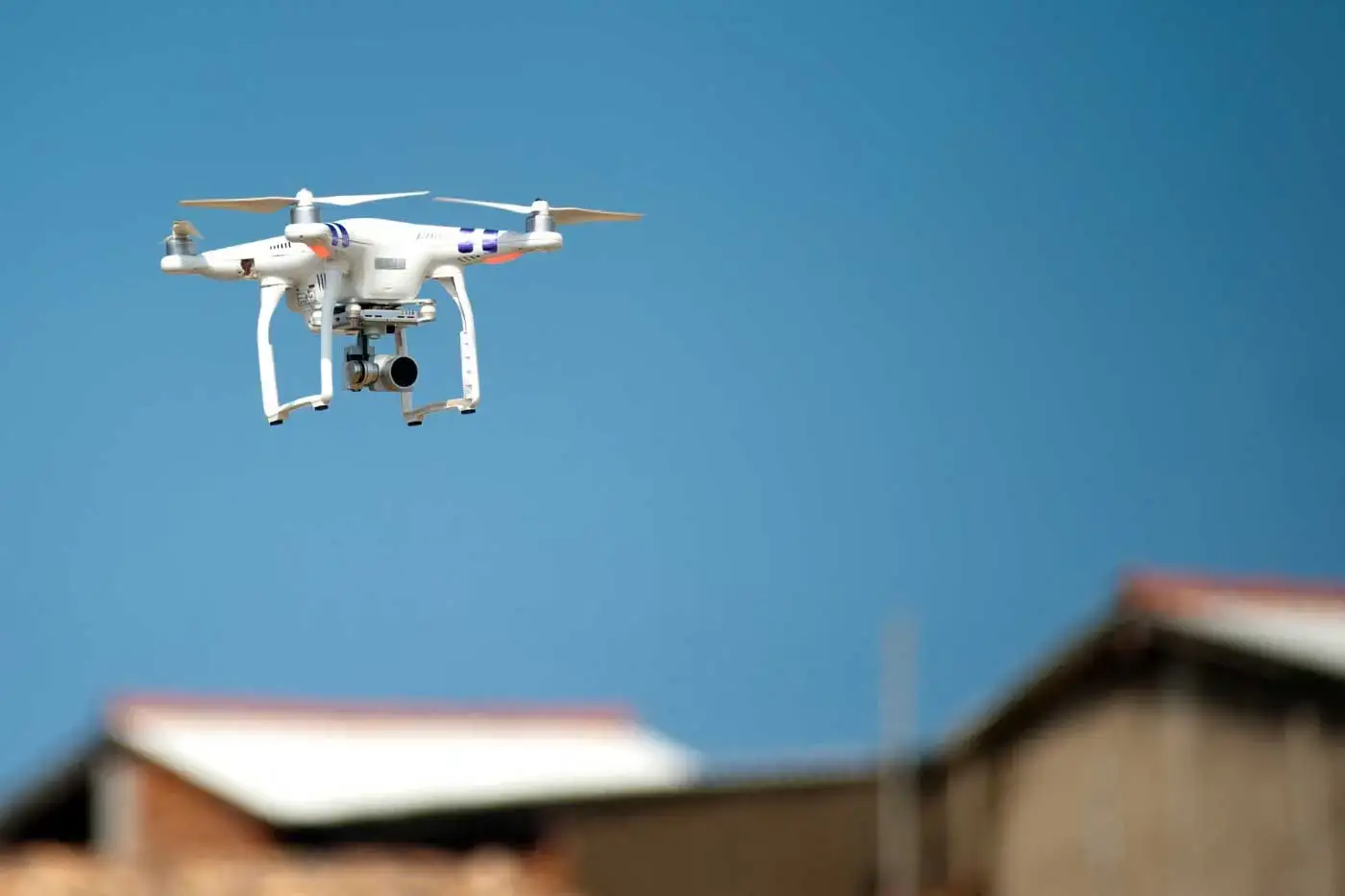
A simple, walkable gable roof may be well-suited to a ladder-assisted inspection, while a steep or high roof, fragile tile material, or large loss area may be better served by drone inspection services.
The right decision is typically based on a combination of factors, including:
- Roof height and pitch
- Property access and surrounding conditions (e.g., tree coverage)
- Roofing material and potential fragility
- Severity indicators and storm conditions
- Local weather and safety considerations
- FAA airspace restrictions
When carriers match the inspection method to the claim, they reduce delays caused by mismatched deployment, repeat visits, and unnecessary equipment. That shortens the path from first notice to inspection completion and gives adjusters usable documentation sooner – helping accelerate claim handling without sacrificing accuracy.
Case Study Snapshot
- Claim cycle time improved by 25% for a major P&C carrier.
- Faster inspection completion helped support quicker payment issuance
- Damages were validated more efficiently at lower inspection cost.
This becomes even more important during catastrophe events.
CAT response scales when carriers aren’t limited to one resource pool
During catastrophe events, traditional field capacity tightens quickly. A broader inspection network gives carriers more options. Drone inspection services introduce an additional resource pool that can be activated alongside ladder-assisted inspectors and adjusters – expanding coverage instead of relying on a single path.
That flexibility matters when claim volume spikes across a wide geographic footprint. Some losses benefit from rapid aerial capture to support early triage and desk review. Others still require onsite inspection due to tree cover, airspace restrictions, interior validation needs, or property layout.
A hybrid model gives carriers more ways to keep inspections moving under CAT conditions – helping maintain momentum and reduce backlogs when demand is highest.
This is where inspection strategy starts to influence more than speed – it begins to shape the consistency and quality of everything that follows in the claim.
More complete roof documentation strengthens file quality
One of the clearest advantages of drone inspection services is documentation density. A properly executed drone inspection can capture broad roof context and detailed imagery across multiple slopes, ridges, valleys, accessories, and elevations – often generating 100+ images across the full roof surface.
That doesn’t replace ladder-assisted inspections – it complements them. Each method produces a different documentation profile.
On steep or high roofs, ladder-based inspections may be limited by safe access points. Drone capture can document the full roof more consistently, including areas that are difficult to reach on foot.
Combined with AI-supported review and standardized capture requirements, this more complete documentation supports stronger, more defensible claim files and reduces the likelihood of missed conditions.
Industry research reinforces this improvement in documentation quality. A study from NAMIC Advocacy found that drone-based inspections can significantly improve dimensional accuracy compared to traditional methods – helping carriers build more consistent and defensible claim files.
More complete documentation also improves claim validation and cost control. According to the Insurance Information Institute, cited by NAMIC Advocacy, insurance fraud accounts for approximately $32 billion annually in property and casualty losses and adjustment expenses – roughly 10% of total P&C losses.
Consistent, high-quality imagery identify discrepancies earlier, reduce rework, and support more efficient claim handling.
Better inspection-method selection reduces unnecessary LAE
Inspection costs are not just about the initial assignment – they’re about the downstream impact of choosing the wrong method.
Steep or high roofs can drive additional costs through safety support, specialty equipment, or repeat deployment. Fragile materials like tile can introduce risk of incidental damage when unnecessary roof walking occurs.
A triage-based inspection model helps carriers right-size those costs. When a roof is heavily damaged in a known storm path, aerial documentation may provide faster confirmation without unnecessary deployment. Conversely, simple accessible roofs may not require specialty equipment.
Matching the inspection method to the claim is one of the most practical ways to reduce avoidable LAE while maintaining quality.
At that point, inspection decisions are no longer just about cost – they’re shaping how efficiently the entire claim can be documented, evaluated, and resolved.
Structured workflows make inspection data more usable for adjusters
Drone inspection services don’t replace adjusters – they support them.
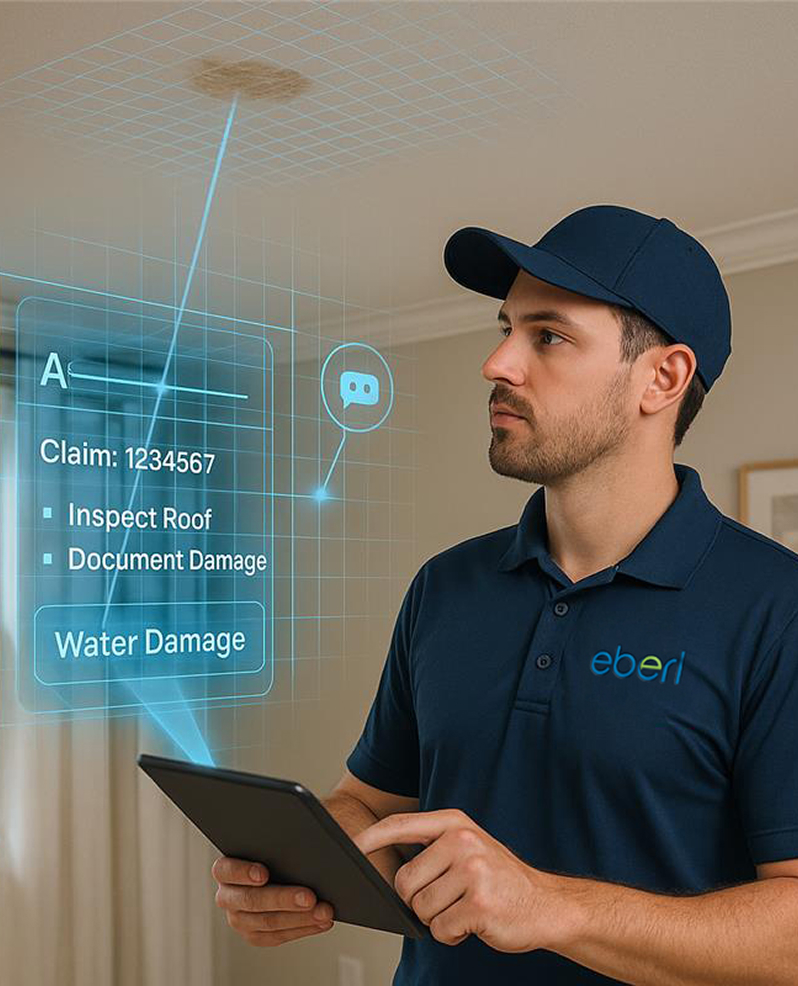
The goal is to deliver clear, organized documentation that licensed adjusters can use to make faster, better-supported decisions on coverage, scope, and estimate direction.
This is where workflow matters as much as the inspection method itself.
Eberl’s approach connects several components into a single, usable output for the adjuster, including:
- Structured data capture from the field
- Standardized documentation and image requirements
- AI-supported analysis to identify damage and patterns
- Licensed adjuster review to validate scope and ensure accuracy
Instead of treating inspections as isolated field events, they become part of a connected workflow designed to support faster, more consistent claim handling.
Safety is another critical factor driving inspection strategy decisions.
Reducing unnecessary roof contact improves safety
Safety remains one of the strongest reasons to expand inspection options.
Steep roofs, high elevations, unstable post-loss conditions, and fragile materials all increase risk. In many cases, the safest decision is not to send someone onto the roof at all.
A drone-first or hybrid approach helps reduce unnecessary roof contact – especially for tile, brittle, or damage-prone materials. Ladder-assisted inspections still play an important role, but the goal is to use the safest effective method for each loss.
These operational improvements directly translate into better outcomes for both carriers and policyholders.
Better inspection strategy leads to stronger claim and policyholder outcomes
When carriers use a more flexible inspection model, the benefits extend beyond operations.
Faster inspection completion and more complete documentation can accelerate decision-making and payment timing. Reducing repeat visits and unnecessary roof access can also improve the on-site experience for policyholders.
Just as important, carriers can communicate that each claim is being handled with the inspection method best suited to the property and loss conditions – building credibility and trust.
According to an Insurance Research Council survey, 88% of homeowners surveyed reported recognizing at least one benefit from the use of aerial imagery in insurance – particularly when it supports faster claims processing and more accurate property assessment.
This reinforces an important point: when inspection methods are selected thoughtfully and integrated into the claims workflow, policyholders don’t just notice the technology – they experience the outcomes.
Over time, that alignment – between inspection strategy, data quality, and workflow execution – helps carriers improve not just individual steps, but the performance of the entire claims process.
Blending human expertise with AI-enabled inspection workflows
The future of property inspections isn’t drone-only or ladder-only. It’s a flexible model that uses the right method at the right time – supported by AI, standardized workflows, and human expertise.
At Eberl, we help carriers build that flexibility into their claims operations through drone inspection services, ladder-assisted inspections, and structured review workflows that support faster, safer, and more defensible claim outcomes.
See how the right inspection workflow can improve cycle time, documentation quality, safety, and overall claim performance in your operation.