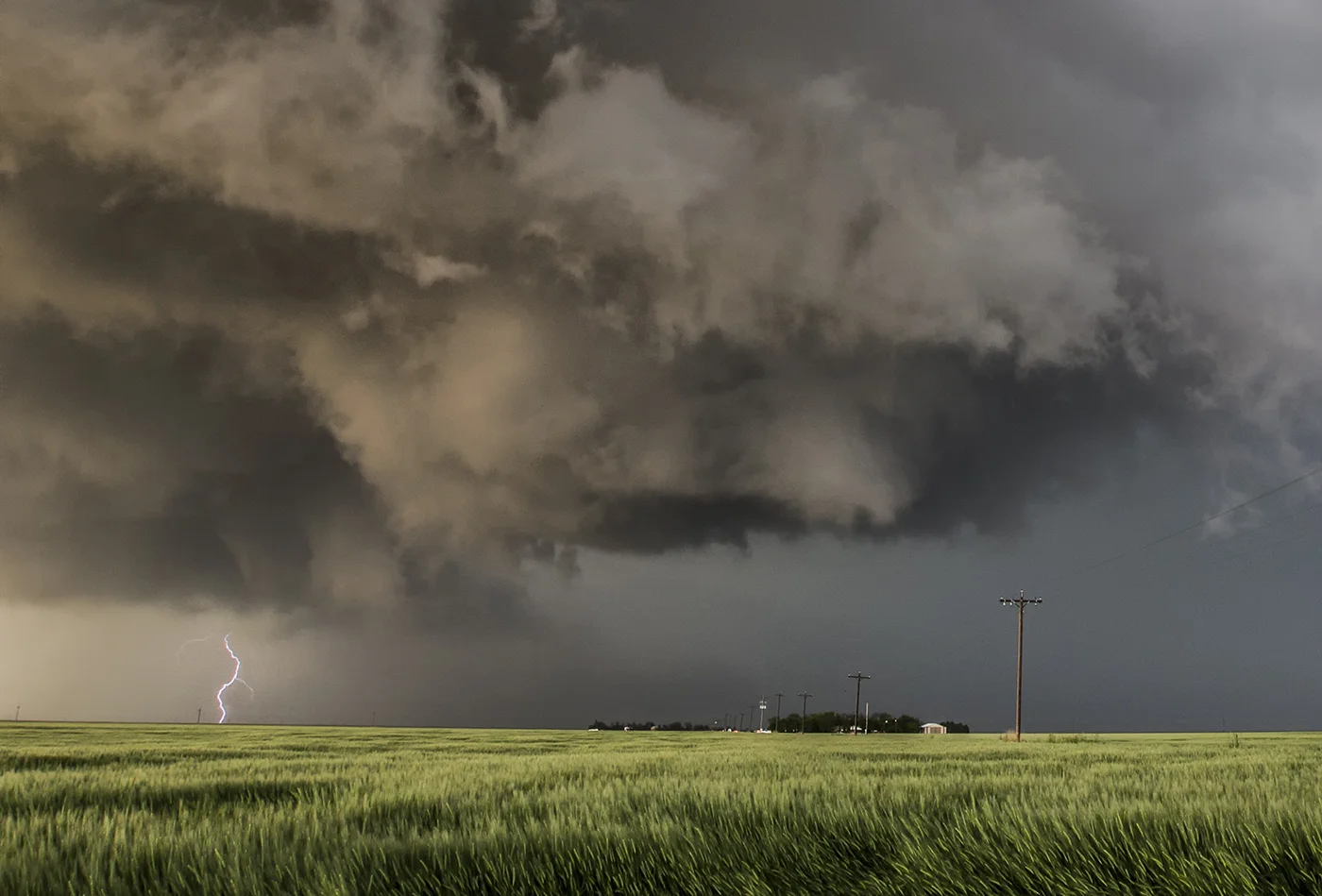
Catastrophe claims are testing the limits of traditional surge models. Increasing complexity, rising costs, and higher expectations for speed and service are reshaping what effective catastrophe claims management looks like. As carriers prepare for the next storm season, how claims are handled during a weather event can directly impact customer retention, operational performance, and long-term outcomes.
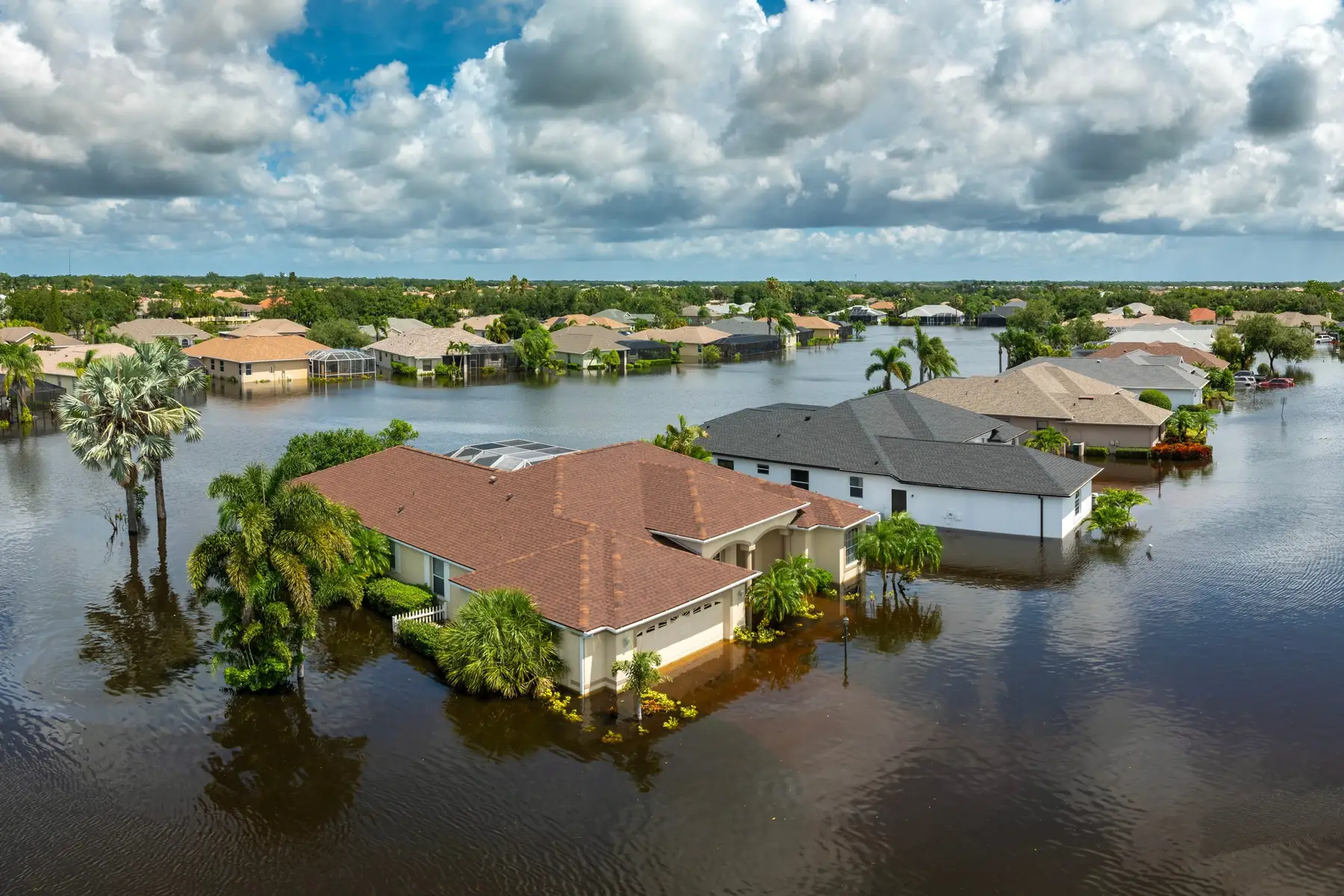
Global insured losses from natural catastrophes reached $137 billion in 2024, according to Swiss Re Institute. While 2025 saw relatively lower event activity, underlying cost pressures haven’t eased. Rising material costs and ongoing disruption in the construction labor market are driving higher claim severity – making future catastrophe events more expensive to manage.
In response, carriers are moving beyond traditional independent adjusting models. The focus is shifting toward partners who can provide flexible, integrated claim management services – scaling operations, navigating the complexity of severe weather events, and stepping in at any stage of the claim lifecycle. At the same time, maintaining a consistent, high-quality policyholder experience has become a critical priority, especially under surge conditions.
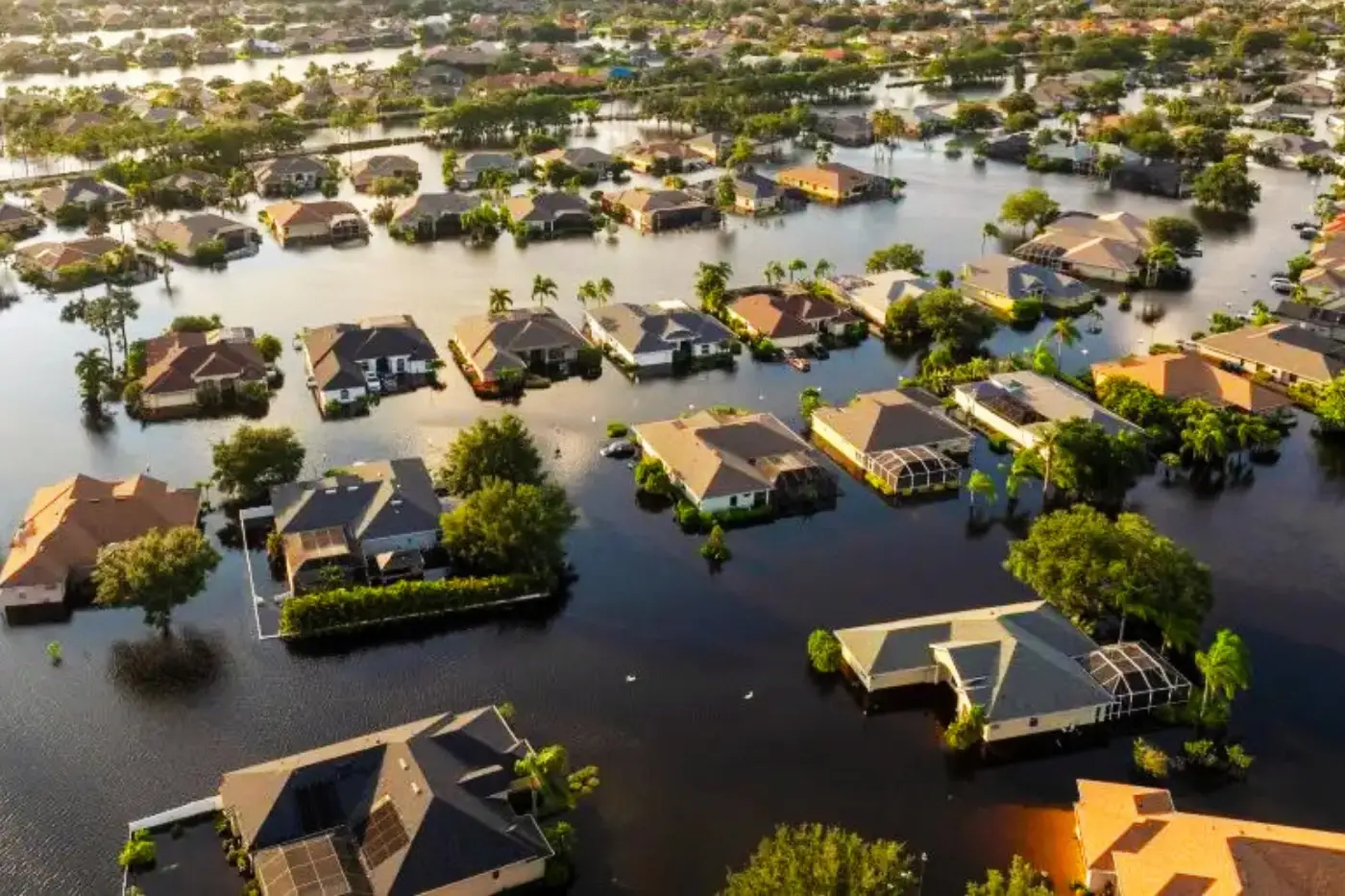
One of the most operationally challenging aspects of catastrophe response is serving hard-to-reach areas. Remote and underserved locations often introduce delays, limited resource availability, and added coordination complexity. Effective catastrophe response requires a partner with the infrastructure, network, and experience to deploy quickly and maintain performance – even in the hardest-to-serve environments.
Catastrophe Claims Management: Beyond Surge Support
Traditional surge models were built to solve for capacity. When catastrophe or large-scale weather events hit, carriers needed more adjusters in the field – fast. That need still exists, but it’s no longer the full picture.
Today’s catastrophe claims management environment requires more than scale alone. Along with independent adjusting services, carriers benefit from partners who can deliver end-to-end claim management services – supporting not just field adjusting, but the full range of operational challenges that emerge during a weather event response, including:
- Surge inspection volume
- Limited adjuster capacity during large CAT events
- Estimating and scope validation
- Repair coordination and policyholder experience
- Specialized claims requiring additional expertise
Together, these pressures are redefining what carriers require from catastrophe claims management. The focus is shifting from capacity alone to more integrated, flexible models that support any stage of the claim lifecycle – delivering better claim outcomes through coordinated execution, end-to-end visibility, and stronger operational control during catastrophe response.
A Proven Mobilization Model to Help You Maintain Control While Scaling Operations
Catastrophe response doesn’t just require speed – it requires control at scale. When weather events impact communities, policyholders need reassurance, and carriers need disciplined, coordinated execution across every stage of the claim.
Eberl’s proven Support at Scale model is designed to deliver exactly that – combining coordinated field and desk adjusting with structured oversight to protect both the policyholder experience and your operational control throughout the event.
Our model is built to prioritize:
- Rapid deployment of experienced adjusters trained to lead with empathy
- Scalable field and desk support aligned to your workflows
- Embedded QA and leadership to maintain consistency under surge conditions
- Real-time visibility to protect cycle time, indemnity management, and policyholder satisfaction
Our CAT response model provides a structured approach to mobilization – helping carriers move quickly while maintaining alignment, consistency, and control:
Event Activation & Centralized Intake: Pre-event mobilization, leadership alignment, and defined handling strategies establish clear assignment pathways and centralized intake with severity-based triage.
Scalable Field & Desk Deployment: Our network of 18,000+ claim professionals are deployed based on event severity, geography, and claim volume – supported by active supervision and performance monitoring.
Claim Handling, QA, & Reporting: AI-assisted workflows accelerate scoping, estimating, and documentation, while every file undergoes expert, human-led QA and compliance review. Structured reporting provides the visibility needed to manage performance across the claim lifecycle.
Performance in Hard-to-Reach Areas: One of the biggest challenges in catastrophe response is maintaining speed and consistency in remote and underserved locations. With a nationwide network and hybrid workforce model combining experienced W2 team members and field-ready 1099 specialists, Eberl can rapidly scale adjuster presence – even in difficult-to-access areas – within days, not weeks.
And with a full suite of integrated claim management services, additional capabilities – such as managed repair, inspection services, and specialty claims support – can be seamlessly incorporated as needed.
End-to-End Claims Management That Maintains Control and Flexibility During Surge Events
During large catastrophe events, scaling resources quickly is only part of the challenge. The real test is maintaining quality and consistency at scale – ensuring every file is complete, defensible, and aligned with your standards while policyholder expectations remain high.
Eberl’s approach to catastrophe claims management is built to prevent breakdown under pressure. Through structured oversight, experienced leadership, and standardized workflows, we help carriers maintain alignment across teams, files, and processes – even as claim volume surges.
Rather than relying on multiple disconnected vendors, carriers benefit from a more unified model. Eberl can support any part of the claim lifecycle – from initial inspection and adjusting through repair coordination and resolution – reducing handoffs, minimizing delays, and improving operational continuity.
This flexible approach allows carriers to engage the specific services they need or leverage a fully integrated solution, depending on operational demands. The result is a more consistent, coordinated claims process that supports better outcomes – without sacrificing control as operations scale.
Accelerating Inspection and Estimate Turnaround During CAT Events
Timely inspections and accurate scope development are often major bottlenecks during catastrophe response – especially when claim volume surges and access to properties is limited. Carriers need partners who can accelerate this stage of the claim without sacrificing accuracy, consistency, or compliance.
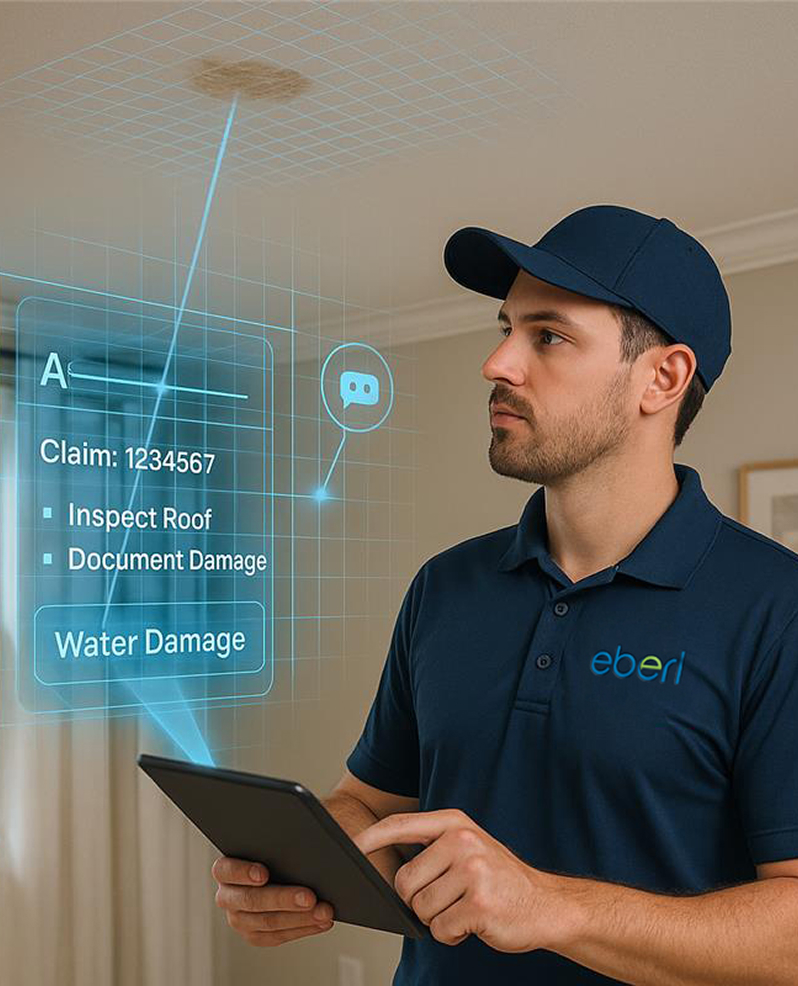
Eberl integrates technology directly into the claims process to remove these bottlenecks and improve performance under pressure. By combining advanced inspection tools with experienced adjusters and structured workflows, we help carriers move from first notice to estimate faster and with greater confidence.
Our technology-enabled approach includes:
- Drone-based inspections to quickly capture high-quality property data, even in hard-to-reach or high-impact areas
- AI-assisted damage identification to support faster, more consistent scoping and reduce variability across files
- Advanced measurement and documentation tools to improve estimate accuracy and file completeness
- Experienced adjuster review on every file to ensure accuracy, defensibility, and alignment with carrier standards
With a nationwide inspection network and mobile documentation platforms, Eberl enables carriers to gather reliable loss data quickly, prioritize claims effectively, and move files through the adjustment process with greater efficiency – reducing delays and helping maintain performance under catastrophe conditions.
Conclusion: A More Integrated Approach to Catastrophe Claims Management
Catastrophe claims continue to test traditional operating models. As complexity increases and expectations rise, carriers need more than surge capacity – they need a partner that can deliver coordinated, end-to-end support across the claim lifecycle.
Eberl combines scale, structured mobilization, and integrated claim management services to help carriers:
- Respond quickly to changing conditions
- Maintain control across the claim lifecycle
- Deliver better claim outcomes under pressure
When catastrophe events occur, having a partner that can align resources, workflows, and technology in real time makes the difference between simply keeping up and operating with confidence at scale.
Explore our claims solutions to see how we can support your operation at any stage of the claims process, from first notice to final repair.